December 2025

Year End Reflection

For close to 30 years, I have used the week between Christmas and New Year’s to do some self-reflection.
I reflect over the past year and evaluate how I did in life, work, spiritually, financially, etc. and then think about the New Year.
This self-reflection can be good.

For me it is a time I review (and revised as needed) my:

  • Personal Mission
  • Core Values
  • Roles
  • History
  • SHAPE (Strengths & Abilities, Personality – helps and blind spots, experiences)

I am trying to be sure they reflect what I think Christ wants in my life.
This is also the time I review my calendar for the next year, to be sure it reflects my values.
A few reflection questions I ask:

  • Do my statements reflect who I really am?
  • Am I becoming more loving and tenderhearted?
  • Am I treating my family and friends as I should?
  • Is my conversation becoming more righteous?”

I won’t send a new insight this week but encourage you to reflect on the five we have already covered:
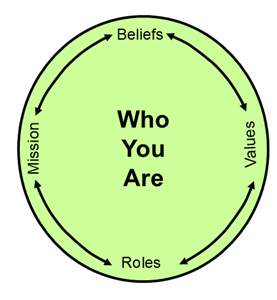
Four from Who You Are?

  • Values
  • Roles
  • Mission/Purpose/Vision
  • Beliefs

And One from How You Are Shaped?

  • Strengths and Abilities


Year End Reflection Read More »

Insight #5: Personal Abilities and Strengths

How I am Shaped

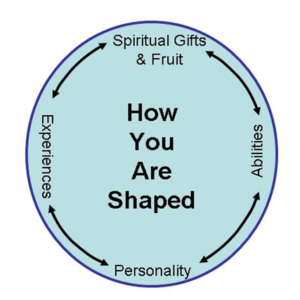
In this series of exercises, we are going to look at how you are shaped. There are many facets we could include, but we are going to focus on four:

  • Abilities
  • Personality
  • Experiences
  • Spiritual Gifts (For Christians)

Insight #5: Personal Abilities and Strengths

Why Understanding Your Strengths Is Important

  1. People are most effective when they know and use their strengths.
  2. Many, if not most, people do not know their strengths.
  3. Because of misunderstanding Scripture, some Christians have one or the other theological misunderstandings on strengths.

We have an interesting paradox in the Christian community because we have two streams that impact this skill.

 “Total Weakness versus Total Strength”

The “holiness” stream emphasized the depravity of man to the degree that many people came to see any acknowledgement of personal strength as pride, i.e. sin. Some people in this stream seem to advocate a philosophy of “Total Weakness”.

  • They emphasize that we can do nothing in ourselves.
  • Their favorite verse is “Don’t think more highly of yourself…”
  • They seem to do everything they can to build a negative self-image

The other stream seems to advocate a philosophy of “Total Strength”

  • Their favorite verse is “I can do all things…!” sometimes to the extreme of forgetting “…through Christ.”
  • They emphasize “We are children of the King” and “We can do anything”.
  • They seem to do everything they can to build a positive self-image.

If we deny we have ability, we are denying God, for it is God who gives us strength and abilities.

If we take credit for our strength and abilities, we also deny God, for it is God who gives us these abilities.

  1. God has given every Christian some areas of strength.
  2. Almost all strengths taken to extremes can produce negative results.[1]

In this session we will focus on abilities and strengths. We will use four exercises and then a summary sheet

  • Exercise #1 – Abilities Profile
  • Exercise #2 – 26 Specialized Abilities
  • Exercise #3 – Personal Abilities and Strengths
  • Exercise #4 – Reflective Questions
  • Summary sheet

Bonus Worksheet for seeing the abilities and strengths in others.

Here is the link to the worksheets for this exercise: Insight #5 Abilities


[1] Marcum, Dave, Steve Smith, and Mahan Khalsa. businessThink: Rules for Getting It Right–Now, and No Matter What! New York: Wiley, 2002. Page 37


Insight #5: Personal Abilities and Strengths Read More »

Insight #4: What is my Core Theological Beliefs/Doctrines?

Discovering your core theological beliefs is a process of introspection, study, and critical analysis. It involves moving beyond inherited beliefs to develop a personal, coherent understanding of your faith.

Key Steps to Discover Your Core Beliefs

1. Consider the Creeds: The Apostles Creed and the Nicene Creed have been embraced by followers of Christ for almost two thousand years. They provide a good starting point for reflecting on beliefs.

2. Consider your family and heritage: What were the core beliefs of your family and heritage? You may not embrace them but understanding them is helpful.

3. Deconstruct and Question: Life events and independent thinking often lead to doubts. Instead of ignoring them, embrace this deconstruction phase. Question what you believe and, more importantly, why you believe it. Be open to the possibility that your beliefs may evolve.

4. Engage in Self-Reflection: Set aside time for introspection to examine your thoughts, emotions, and motives. Questions to guide this reflection include:

    • “Why does the universe exist?”
    • “Why am I here?”
    • “Is there a God?”
    • “Is there good and evil?”
    • “What is truth??
    • “What is real?”

5. Seek Community and Dialogue: Discussing your beliefs with friends, mentors, or a faith community can provide valuable insights and challenges. Listen to different viewpoints and be prepared to articulate your own thoughts respectfully. This helps you to test if your reasoning is convincing to others.

6. Apply Your Beliefs and Test Them: Authentic faith should manifest in your actions and behavior. Test your beliefs by seeing if they align with your operational behavior and whether living by them produces positive “fruit” in your life and the lives of others.

7. Be Open to Growth: View your understanding of faith as a journey. Be open to new insights and the possibility that your core beliefs can be refined over time as you grow in wisdom and experience.

Many theological doctrines and beliefs are important to you but there are a few you are passionate about.

For example, I am part of the Assemblies of God who have “16 Fundamentals of Truth”. I believe all of them, but there are only 4 or 5 I draw a line in the sand about. These are my core beliefs.

What are the five or six core doctrines that are the foundation of your personal theology?

Pray: Lord, please help me to identify the theological beliefs which you desire me to hold as my very core beliefs.

Here is the link to the worksheet: Insight 4 belief

Insight #4: What is my Core Theological Beliefs/Doctrines? Read More »

Insight #3: MISSION/VISION/PURPOSE

Driving in fog[1]

Imagine you are driving at night in the middle of winter. You’re going down a freeway at 65 miles an hour when all of a sudden you drive into a thick fog.

How do you feel the minute you realize you can’t see more than 15 or 20 feet in front of you?  Your initial response is probably a bit of panic. Most likely your foot immediately moved to the brake, and you slowed down.

You drive slowly as you don’t want to run into someone who has stopped or is going slower than you are. You are worried about someone running into you.

Then all of a sudden, the fog gets much thinker. Now you can only see 5 feet in front of you. You probably roll down the window and try to follow the lines on the highway. You are afraid to stop for fear someone will hit you, but it is impossible to go faster and not run off the road or into another vehicle. You can barely move forward – it is like you are driving with a blindfold over your eyes.

Then you start to emerge from the fog. Now you can see four, then six then ten lines in front of you. Now you can see the next turn in the road and then you break totally out of the fog and can see 200 yards in front and behind you.

What is your emotional response when you can clearly see?

You probably have a great sigh of relief and an easing of your muscles. Your foot moves off the brake and back onto the gas pedal. You pick up speed. Your hands stop sweating, you put your arm back on the armrest, you turn the radio back on and find yourself relaxing again.

The only thing that changed was your vision. To live your life without a mission/vision is like going through life in a fog.

“The most pathetic person in the world is someone who has sight but no vision.” – Helen Keller

A personal mission statement is “a brief written expression of your overall purpose in like.”

For this exercise we will use the words mission and vision and purpose as synonyms. Use whichever word is most comfortable to you.

[1] Adapted from What Matters Most: The Power of Living Your Values. New York: Simon & Schuster,  2000. Page 106-107

Download the exercise here == Insight 3 mission

Insight #3: MISSION/VISION/PURPOSE Read More »